Engineering a safer, more efficient Army
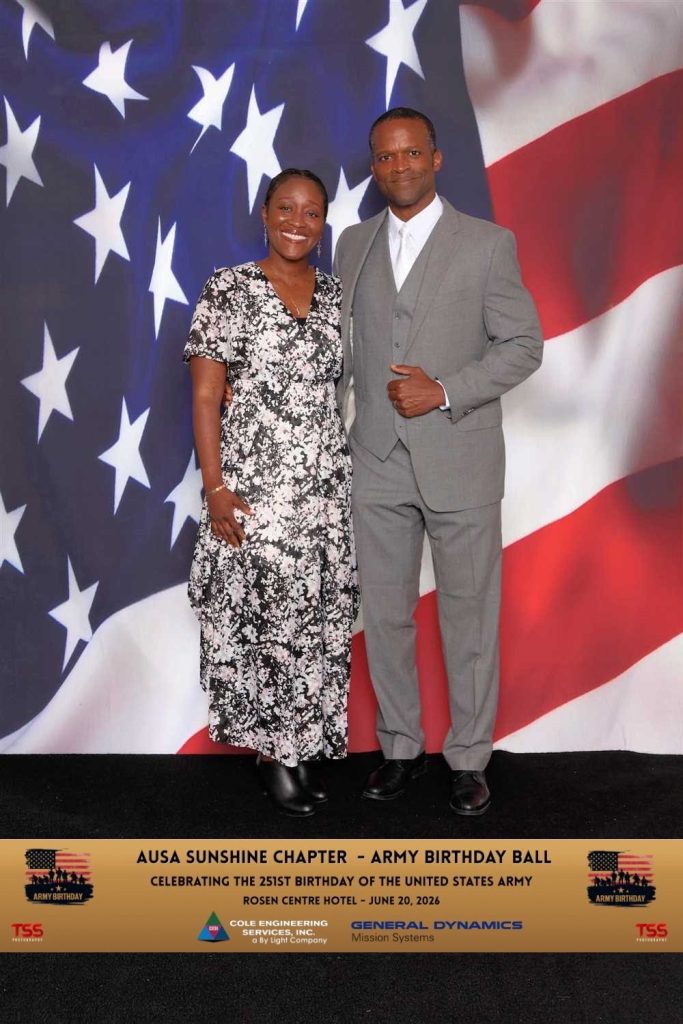
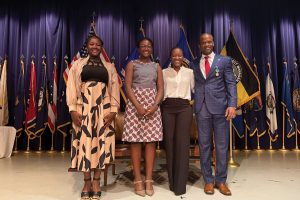
Stephen McFarlane ’06 and his wife, Teokor (Quarcoo) McFarlane ’04, are pictured at the 2026 Army Ball in Orlando, FL.By Bryan Hay
By Bryan Hay
Stephen McFarlane ’06 and his wife, Teokor (Quarcoo) McFarlane ’04, are pictured at the 2026 Army Ball in Orlando, FL.His dad served on active duty in the Navy for 21 years, his sister also commissioned in the Navy, and his brother is a deputy sheriff. It only seemed natural that Stephen McFarlane ’06 would join the family business of protecting others in some way.
For 20 years, McFarlane has been employed as a civilian for the Army, working to improve and enhance everything from munitions and armaments to force on target training systems.
“As I get older, I find the majority of the people fighting our wars are like my kids,” he says. “They’re 18, 19-year-olds who selflessly volunteered to serve our country. Knowing the work I do could likely ensure they come home safely is the most meaningful part of what I do every day.”
With his mechanical engineering degree from Lafayette College and a master’s degree in mechanical engineering from Stevens Institute of Technology, McFarlane first went to work for the U.S. Army Combat Capabilities Development Command, advancing to branch chief for combat armaments and protection systems at Picatinny Arsenal, the Army’s premier research and development facility on the East Coast.
He now serves as the Army’s Product Manager, Tactical Training Systems on the staff of Capability Program Executive Simulation, Training, Test, and Threat in Orlando, Fla. Specifically, he oversees the software and targets on all of the Army’s training ranges.
“Every country has issues. Every country has challenges. Ours is no different, but we do so much good for the world and so much good for our people. And the military is an important aspect of that,” McFarlane says.
“There are many elements of power, economic and diplomatic power, for example. When all those other instruments fail, then we have our military, which is also another instrument of power,” he adds. “When our soldiers are in harm’s way, ultimately my profession supports an aspect of their readiness to ensure they accomplish the mission and come home alive.”
In his day-to-day work, McFarlane usually interacts with higher ranking officers and civilian personnel, from majors and lieutenant colonels on up.
But he has been on the ground with privates, corporals, and sergeants to learn directly from them on how to improve systems that provide better capabilities for military personnel on the front lines, and the critical equipment they use in combat.
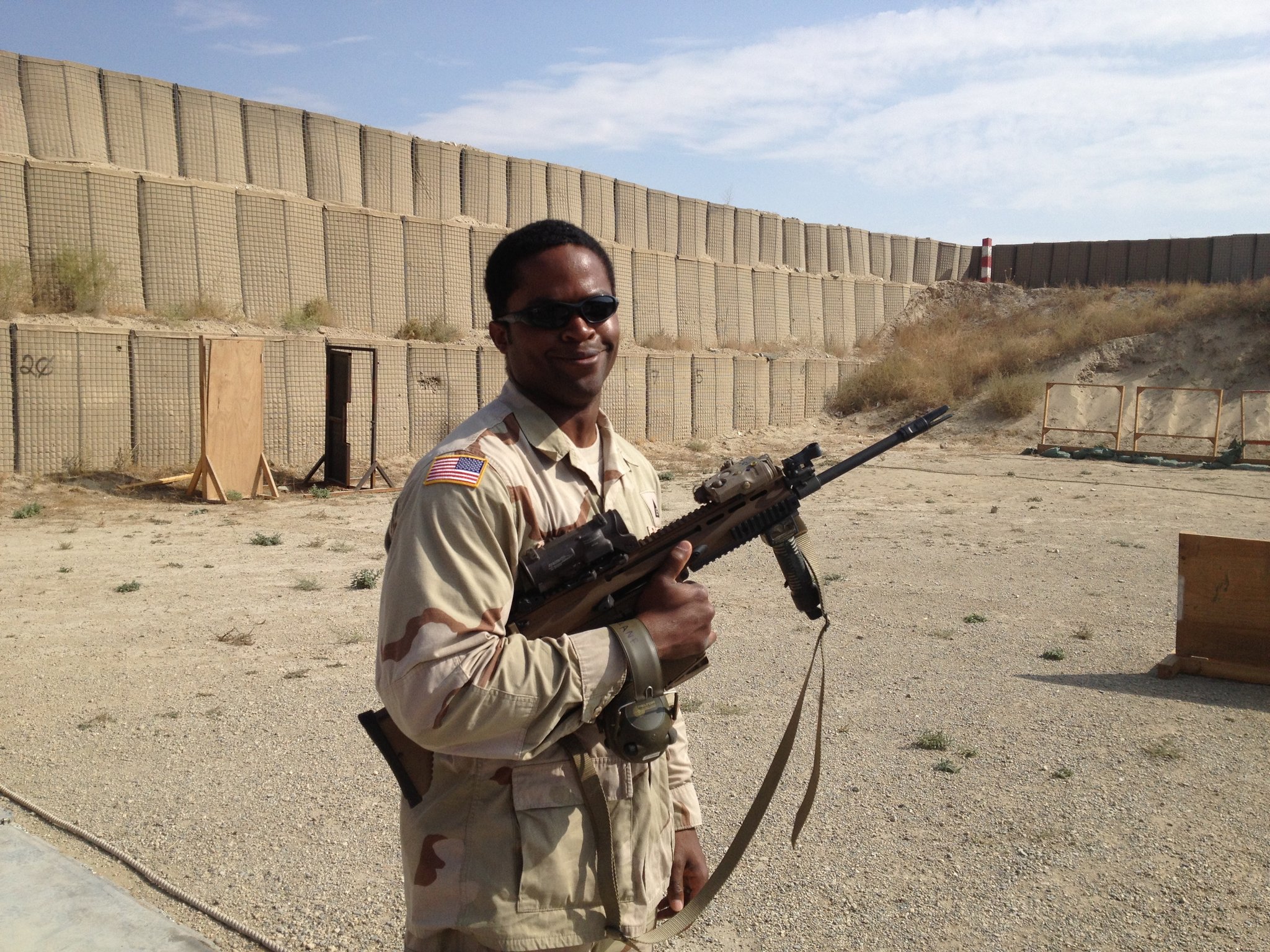
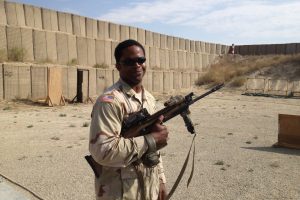
Among accomplishments of which he’s most proud is his deployment to Afghanistan in 2012. It was a classroom and learning experience like none other.
By observing and interacting with soldiers on the front lines, he developed, designed, and patented a cover to protect thermal imagers on vehicle-mounted remote weapon systems. Thermal imagers detect infrared heat signatures emitted by troops, vehicles, and electronics.
“While in Afghanistan, we found a lot of soldiers were complaining that hostile personnel throwing rocks were causing costly damage to thermal imagers, so I developed a cover to enable essential functions while providing protection to the lens,” McFarlane says, noting the innovation likely saved tens of thousands of dollars by preventing damage to the expensive electronic gear.
As a career high point, McFarlane also counts opportunities he was afforded to serve in the Office of the Secretary of War and being chosen to attend the Eisenhower School for National Security and Resource Strategy, a select school for senior military officers, civilians, and representatives from the private-sector industry.
“Getting to go there and meet people from all walks of government, from the State Department, to Homeland Security, to the intelligence community, and, of course, all the military services, was one of the many things that I’m particularly grateful for in my Army career,” McFarlane says. “I’ve had the privilege of experiencing a mix of experiential and actual accomplishments. Both go hand-in-hand for me because it’s all part of the journey, all part of your story.”

Lafayette, the foundation
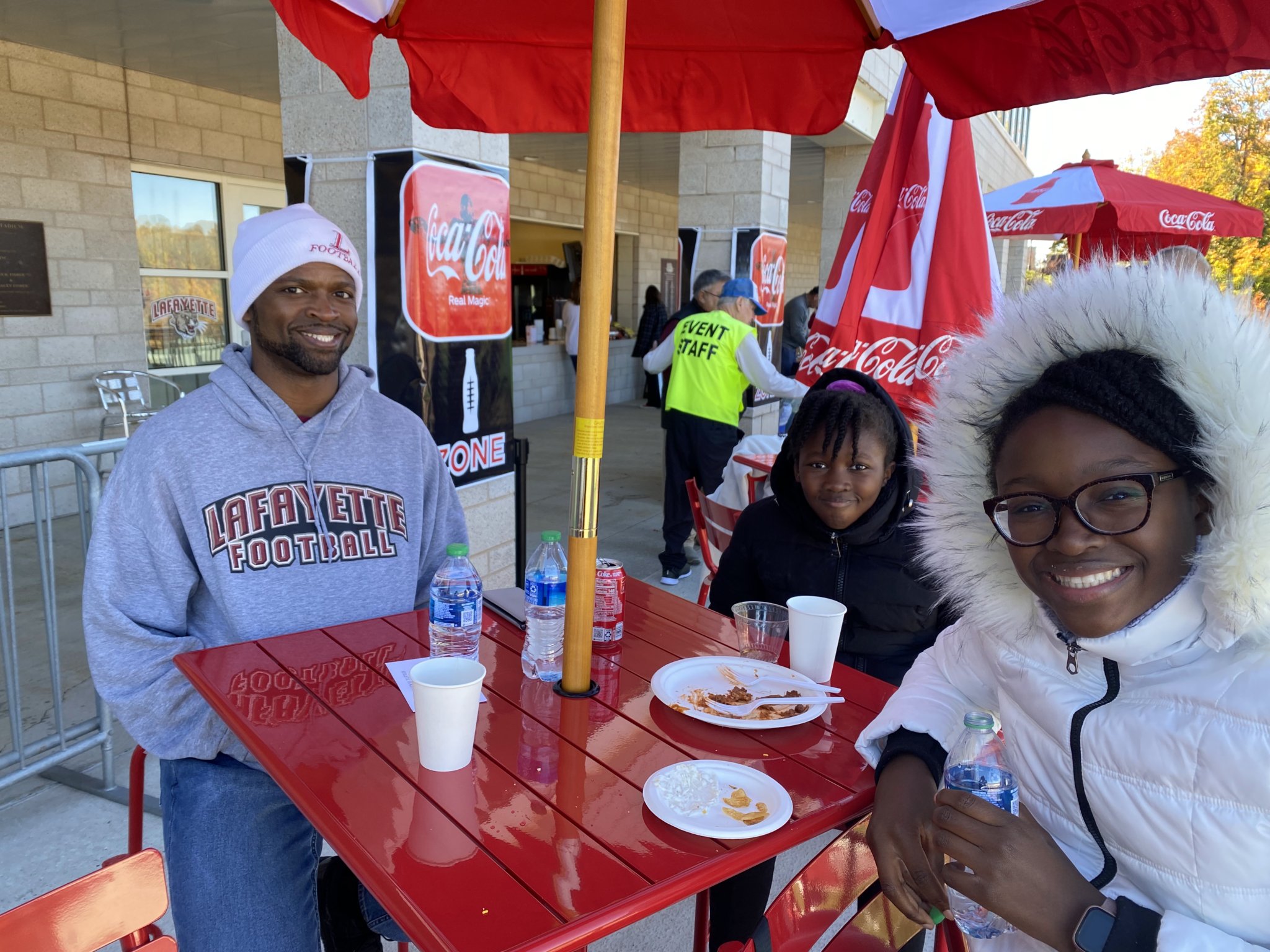
McFarlane came to Lafayette for the opportunity to study engineering and play football. He started out as a linebacker and moved to defensive end. It was a memorable four years for him on the team, which won two Patriot League championships and beat Lehigh three out of the four years.
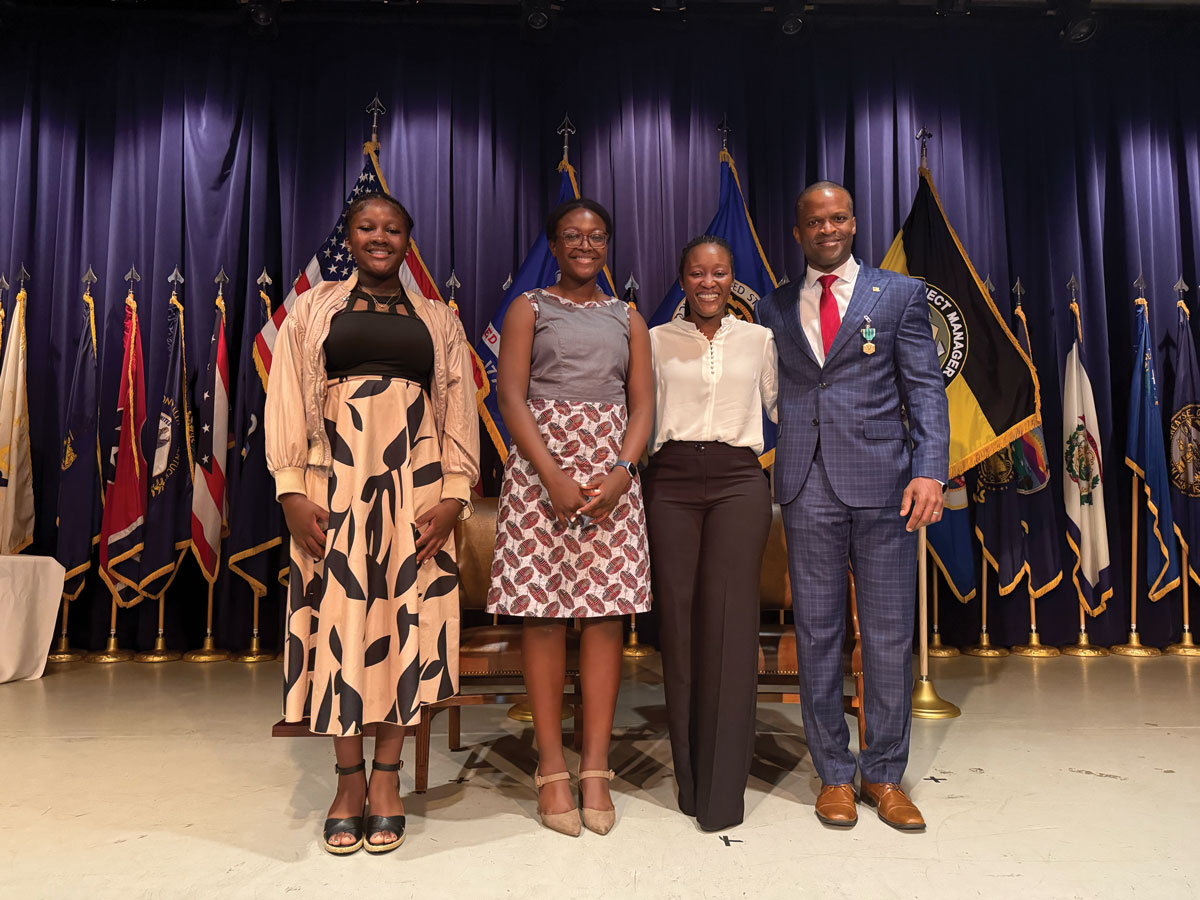
A member of the Fellowship of Christian Athletes and student chapter of the American Society of Mechanical Engineers, he also met his future wife at Lafayette, Teokor (Quarcoo) McFarlane ’04 (chemical engineering), a principal scientist at Merck. They hope one day their kids, Kelly and Stacy, also will become Lafayette engineers.
“I was always interested in engineering, and initially leaned more toward the automotive side of things,” he recalls. “And then, while I continued to learn more and more about the greatest opportunities within engineering, I just thought, you know what, I don’t like automotive that much anymore.”
His mentors at Lafayette include retired head coach Frank Tavani, whom McFarlane credits for his leadership in “turning young men who might have been knuckleheads into productive adults,” and Karl Seeler, emeritus associate professor of mechanical engineering.
“He steered me toward Picatinny Arsenal–I did not know there was an Army civilian path until he told me–and urged me to get my master’s degree,” says McFarlane, adding that he would recommend a civilian career in the military sector to Lafayette students.
“It’s a proving ground to continue to develop your skills and maintain your marketability within and outside of the government,” he adds. “Lafayette is also a proving ground because of its challenging academic culture and its supportive faculty.
“Lafayette professors care about their students. From what I observed, it wasn’t like a factory trying to pump kids through it,” McFarlane says. “They were always looking for ways to help and support students. That’s what really affirmed my decision to come to Lafayette. There’s a community of people who I’m still in touch with now, which is also confirmatory. Lafayette was the right choice and why I will always consider it home.”